
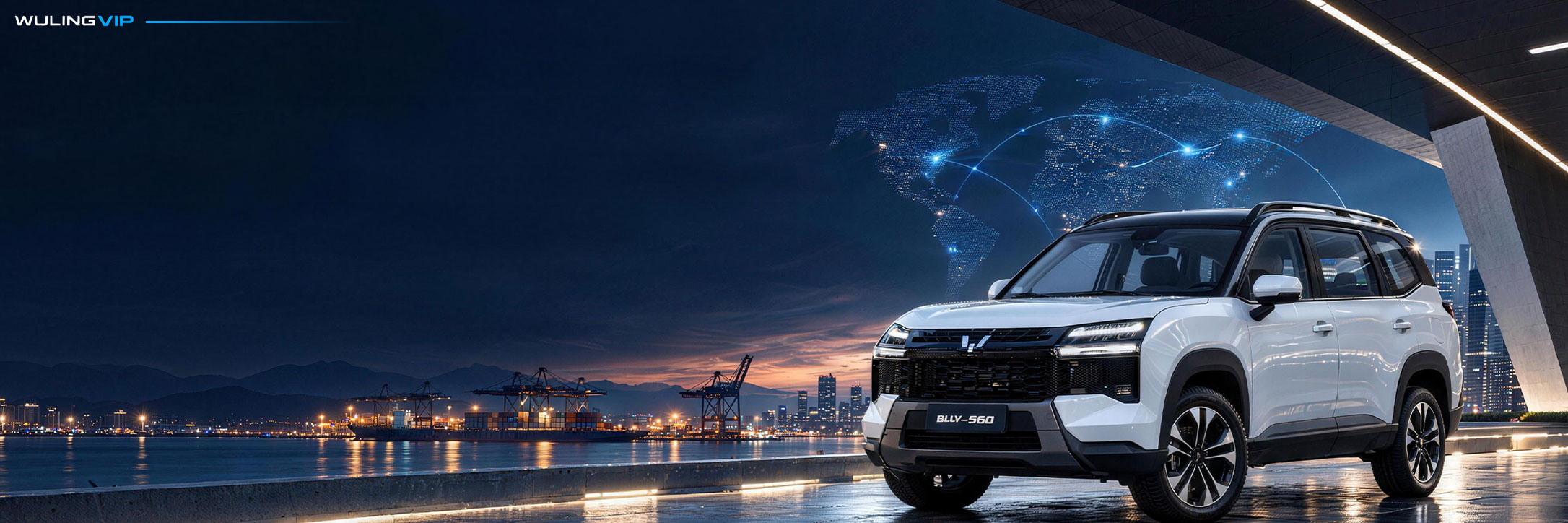
A specification-led comparison of space, driving range, powertrain technology and international dealership opportunities—with a special focus on the Wuling Starlight 560's practical design and competitive FOB value proposition.

Wuling Starlight 560 gasoline/PHEV exterior. Original manufacturer product-page image, cropped without modifying the vehicle.
International buyers comparing Chinese electric vehicles are increasingly looking beyond a single headline price or a dramatic technology claim. Whether the vehicle will be driven by a family, introduced into a dealership's showroom or evaluated for a corporate fleet, the practical questions are similar: Is there enough usable space? How convenient is the powertrain? How much electric driving can the owner realistically achieve? What does the importer receive for the quoted FOB price? And what support will be available after delivery?
Three relevant options are the Wuling Starlight 560 PHEV, BYD Sealion 5 DM-i and Chery Fulwin T8. All three combine an internal-combustion engine with electrified drive, but they have different selling points. Wuling emphasizes usable space and competitive value, BYD brings a widely recognized hybrid family, and Chery offers a turbocharged powertrain with optional seven-seat flexibility in certain configurations.
For global buyers exploring autos wuling, automobiles wuling or wuling auto, the Starlight 560 adds a mid-size family SUV proposition to the brand's wider passenger and commercial vehicle portfolio. It is particularly worth examining when an importer needs a clearly differentiated five-seat SUV rather than another similarly sized product competing solely on badge recognition.
This article uses the supplied three-model comparison as its baseline and cross-checks selected measurements and technical details against official Wuling, BYD and Chery materials. Specifications refer to the stated variants, not every version offered globally; equipment and homologation may vary by destination.
| Specification | Wuling Starlight 560 PHEV | BYD Sealion 5 DM-i | Chery Fulwin T8 |
| Length | 4,745 mm | 4,738 mm | 4,730 mm |
| Width | 1,850 mm | 1,860 mm | 1,860 mm |
| Height | 1,755 mm | 1,710 mm | 1,747 mm |
| Wheelbase | 2,810 mm | 2,712 mm | 2,710 mm |
| Seats | 5 | 5 | 5 or optional 5+2 |
| Electric driving range | 125 km CLTC; 100 km WLTC | 71 km NEDC on one overseas 12.9-kWh version; other variants differ | 130 km China-market reference variant; check exact certification |
| Engine | 1.5L naturally aspirated | 1.5L naturally aspirated | 1.5T turbocharged |
| Hybrid family | Wuling PHEV | DM-i | Kunpeng C-DM |
| Low-SOC fuel consumption, source reference | 5.3 L/100 km (WLTC) | 4.55 L/100 km (source comparison) | 4.75 L/100 km (source comparison) |
| Front / rear suspension | MacPherson / multi-link | MacPherson / multi-link | MacPherson / multi-link |
Sources: supplied one-page comparison; Wuling official specifications; BYD overseas specification sheet; Chery Fulwin T8 official page. The 71 km BYD rating is NEDC, not CLTC; these driving-range figures must not be interpreted as a same-cycle ranking. Fuel-consumption test methods must also be normalized before claims of superior efficiency.
At 4,745 mm long, the Wuling Starlight 560 is only marginally longer than its competitors, yet its 2,810 mm wheelbase is 98 mm longer than the reference BYD Sealion 5 and 100 mm longer than the reference Chery Fulwin T8. Wheelbase is not identical to rear-seat legroom, but it gives designers more room to optimize passenger accommodation and cabin packaging. This difference makes the Starlight 560 especially interesting for family users, chauffeured transportation and businesses requiring comfortable rear seating.
The newly supplied Wuling Starlight 560 product materials go further: they present a claimed 83% usable-space ratio, 990 mm seat spacing and 3,202 mm interior length. The materials also show that folding the rear seats can create a roughly 2-meter flat resting surface, while a headline maximum cargo capacity of 1,945 liters is advertised in the illustrated configuration. These are manufacturer promotional figures; measurement conventions and actual luggage space should be confirmed for the individual export trim.

Original Wuling product-material panels, cropped only. Figures are manufacturer claims and can vary with seating configuration.
Why does that matter to international buyers? Many shoppers judge a vehicle on a demonstration drive, but live with its interior every day. A roomy back seat makes a difference during school runs, weekend journeys and airport pickups. Flat-folding seats can help accommodate luggage, camping equipment or bulky personal items. A generously proportioned cabin also offers dealers an easy, tangible benefit to demonstrate during showroom visits.
Chery provides a meaningful alternative when a customer needs more than five seats. Official Fulwin T8 materials describe five-seat and seven-seat arrangements in certain trims. The trade-off is that an occupied third row can limit cargo flexibility. BYD focuses on a conventional five-seat family-SUV arrangement, and its own regional specifications provide separate cargo-volume figures. A fair space test should compare luggage accommodation with the seats in the same position, not simply pick the largest published number.
The Starlight 560 product visuals show two cabin color treatments: Walnut Brown and Warm Sand Brown. Its upright cabin architecture, horizontal dashboard and central display are designed for a straightforward modern presentation. Exterior color illustrations show Frost White, Mist Grey, Obsidian Black and Stellar Blue. Color availability is subject to destination specification and order confirmation.

Walnut Brown interior, directly cropped from the user-supplied product visual.
Range is one of the most searched attributes for chinese ev cars and plug-in hybrid SUVs. But comparison is only meaningful when ratings are measured under the same procedure. The supplied one-page comparison lists 125 km for Wuling, 71 km for the selected BYD overseas version and 130 km for the Chery reference version. Importantly, official BYD overseas documentation identifies its 71 km figure as NEDC, not CLTC. Treating all three as CLTC would be incorrect.
For the Wuling Starlight 560 125-km PHEV version, official Chinese specifications state 125 km CLTC and 100 km WLTC electric range. The same configuration lists a 20.5-kWh lithium-iron-phosphate battery, 145-kW electric motor, 3.3-kW AC charging and around 30 minutes for the quoted 30–80% DC fast-charge condition. Values can change with temperature, electrical supply, driving behavior and actual configuration.
For BYD, different export markets carry different versions and rating labels. One Australian Sealion 5 version lists 71 km NEDC; BYD's European materials describe WLTP-rated variants with different capacities and electric ranges. A dealer should request the applicable certificate and complete technical sheet instead of assuming that a global nameplate always denotes a single battery configuration. For the Chery Fulwin T8, the 130-km variant is a China-market product choice and should likewise be matched to the correct destination-market documentation.
For a family whose daily trips are relatively short and who can charge consistently, the Wuling's rated electric operating capability is an attractive proposition. For occasional longer-distance journeys, the gasoline engine adds flexibility. Users who seldom plug in their PHEV will obtain a very different fuel-cost experience from a household that charges every night.
Fleet procurement teams should create a daily route profile before choosing a powertrain. Record each vehicle's kilometers per day, idle time, local electricity tariffs, charging access and expected passenger or cargo load. Determine the time available for recharging between shifts. A longer laboratory electric rating is only valuable if daily operation can take advantage of it. This is why effective procurement compares usable range, uptime and service support rather than simply placing the largest range number on a banner.
The supplied Wuling product brochure illustrates the Starlight 560 as an SUV with three power options: gasoline, plug-in hybrid and pure electric. This broader family matters to dealerships because different cities and regions can have different customer demands. Some users prioritize familiar gasoline refueling, others want electric commuting with long-trip backup, and still others prefer an all-electric vehicle. Availability of each specification for export is subject to confirmation.

Original supplied image presenting the three powertrain configurations. Image content and vehicle representations are unaltered.
For the PHEV discussed here, Wuling combines a 1.5-liter naturally aspirated gasoline engine with an electric drive unit. The official Chinese configuration lists 78 kW rated engine power, 145 kW electric motor output and 230 N·m maximum electric motor torque. Its stated 5.3 L/100 km WLTC low-state-of-charge fuel consumption provides one reference point for operators, but it should not be conflated with weighted combined usage or a real-world fleet average.
BYD's DM-i architecture is another established approach to electric-assisted daily driving. The Sealion 5 overseas versions pair a naturally aspirated 1.5-liter gasoline engine with electric drive. In some official markets, a 12.96-kWh battery is featured, while others offer larger batteries and longer ratings. BYD's technology and brand recognition may be significant advantages for buyers who already know the manufacturer's product ecosystem.
Chery's Fulwin T8 uses a turbocharged 1.5-liter hybrid engine in the reference material, appealing to consumers who view powertrain performance as a major part of an SUV's value. The official Chinese model page also shows different seating and equipment specifications. Powertrain comparisons should look beyond the engine alone: motor output, system calibration, acceleration, real fuel consumption and supportability all influence the driving experience.
Design is not simply aesthetic; it is part of how a dealership positions a vehicle in a busy market. The Starlight 560 supplied material emphasizes a rugged front face, a three-dimensional grille on gasoline/PHEV versions, X-family lighting design and strong, relatively upright body lines. A separate pure-electric version uses a different front treatment, so the gasoline/PHEV and EV front fascias should not be accidentally interchanged in marketing artwork.
Gasoline/PHEV front fascia |
Pure-electric front fascia |
Both share the Starlight 560's overall SUV silhouette, but the distinct bumper and grille elements matter for visual accuracy. On a product page, mixing EV photography with PHEV specifications could mislead an overseas purchaser about the version being quoted. The imagery used in this article preserves the original vehicle bodywork, logos, lighting and stance without AI reconstruction or appearance retouching.
Safety is essential for buyers of chinese electric car products and hybrid SUVs, yet promotional claims need careful context. Wuling's product materials show its Shenlian battery architecture and a six-ring high-strength body cage. They also cite 1,500 MPa hot-formed steel applications and a 74.9% high-strength steel proportion. These are manufacturer-stated engineering descriptions, not substitutes for independent crash-test ratings or an automatic guarantee of accident outcomes.

Manufacturer-supplied battery and body-structure diagrams. Safety claims must be assessed against the applicable product documentation and certification.
The source's language about zero fire risk should not be taken literally as a universal safety guarantee. Every battery and vehicle design is subject to operating limits and residual risk. Dealers should obtain model-specific certification, repair procedures and warranty terms before preparing definitive safety advertising.
Similarly, equipment availability can vary widely by market. Prospective buyers should compare electronic stability control, airbags, reversing cameras, parking sensors, child-seat provisions, infotainment language settings and connected features using exactly matched trim levels. Advanced assistance features available in one country may not be available or enabled in another.
The original market comparison also notes that perceived interior finish, infotainment sophistication and NVH refinement can be competitive considerations for Wuling. These are areas for direct inspection and local test driving. Balanced comparisons build greater confidence than claims that one model is superior in every possible respect.
Many international automotive businesses search for wuling car price to understand the brand's positioning, but a public comparison article does not need to show a specific export quotation. Wuling's commercial story is best framed around high value for the FOB investment: a spacious, modern Chinese SUV supported by a manufacturer with extensive vehicle-development and production experience.
For importers, FOB means Free on Board under agreed Incoterms. A proper FOB offer identifies the loading port, exact vehicle version, quantity and agreed shipment responsibilities. It is different from delivered cost, which may include international freight, insurance, customs charges, local taxes and final market preparation.
Wuling's competitive positioning is especially relevant when buyers want an attractive ratio of vehicle size, features, electrified capability and procurement cost. The Starlight 560 can be marketed as a compelling FOB-value proposition without making an unsupported claim that it has the lowest price in every market, on every date or against every trim. Its actual offer depends on the specification, quantity, production availability and commercial terms.
For independent distributors, used-car trading companies expanding into new vehicles, established dealership groups and wholesale buyers, a value-oriented PHEV may appeal to customers who want a practical SUV but do not wish to pay a premium solely for established name recognition. This is the space where Wuling aims to be competitive.
When requesting an offer, provide the destination country, expected order volume, preferred powertrain, left-hand-drive or right-hand-drive requirement, target equipment specification and preferred shipment timeline. Ask for the exact FOB port and clarify documentation, parts availability and warranty arrangements. A lower unit quotation is not useful if the vehicle cannot be legally registered or effectively maintained in the destination market.
Automotive procurement is ultimately a business decision. A showroom may attract attention with a striking design, but a sustainable dealership must sell vehicles that meet customer needs, comply with local law and can be supported over time. This applies whether a dealer specializes in conventional cars, wuling electric cars, wuling ev cars or a wider portfolio of chinese electric vehicles.
For family-focused retail outlets, the Starlight 560's wheelbase, spacious cabin and folding-seat use cases provide demonstrable benefits. Dealers can show customers how passenger and cargo functions work in person. For taxi or corporate transport programs, rear-seat comfort and uptime may be more important than stylistic options. For larger fleet tenders, procurement managers should assess supply capacity, documentation, registration eligibility, service response, training and parts plans before specifying a model.
At the same time, buyer preferences remain diverse. BYD's recognizable DM-i product line can appeal to customers prioritizing familiarity with a widely promoted hybrid system. Chery's optional seven-seat configuration may serve buyers who cannot compromise on passenger count. Wuling's opportunity is to offer a practical, spacious alternative with strong FOB value and a wider family of gasoline, PHEV and BEV options where available.
An overseas importer should review destination-market certification and applicable steering-position requirements first. The presence of a right-hand-drive promotional video or product demonstration is not, on its own, proof that a particular RHD variant is certified or orderable in a specific territory. The final ordering process should establish market eligibility and the exact approved configuration.
It is also helpful to understand the manufacturer. Wuling products are associated with SAIC-GM-Wuling (SGMW), a joint venture with a substantial Chinese manufacturing footprint and an international product portfolio. For a distributor evaluating a china vehicle company or selecting a chinese vehicle brand, production scale is one indicator of capability, but local fulfillment and after-sales execution still require separate verification.
| Buyer priority | Model to investigate first | Why |
| Long wheelbase and a roomy five-seat cabin | Wuling Starlight 560 | 2,810 mm wheelbase and promotional space-layout claims |
| Strong FOB-value positioning for vehicle sourcing | Wuling Starlight 560 | Value-oriented positioning; confirm current formal offer |
| Recognized hybrid brand ecosystem | BYD Sealion 5 | DM-i family and international visibility |
| Optional seven-seat configuration | Chery Fulwin T8 | Selected versions support 5+2 seating |
| Regular charging and electric commuting | Compare exact PHEV trims | Test cycles and actual battery sizes differ |
| Fleet procurement or tender project | Market- and use-case-dependent | Regulatory approvals and service support decide feasibility |
No result in this matrix is an independent road-test ranking. It is a purchase-guidance summary based on documented specifications and stated market positioning.
Frequently Asked Questions
The Wuling has a longer stated wheelbase than the comparable BYD configuration and makes a strong case for buyers who prioritize usable space and FOB value. BYD may better suit customers who place greater emphasis on an established DM-i ecosystem. A fair decision requires comparable trims, certified data and a current commercial quote.
The Wuling Starlight 560 has a 2,810 mm wheelbase, according to official Wuling product specifications. The reference BYD Sealion 5 has 2,712 mm and the Chery Fulwin T8 has 2,710 mm.
Yes. Chinese manufacturer materials show gasoline, plug-in hybrid and pure-electric configurations, although international availability and individual export specifications require confirmation. The product also belongs to a broader portfolio of electric car auto and electrified mobility offerings.
The official specification for the 125-km PHEV configuration lists 125 km CLTC and 100 km WLTC. Actual distance depends on driving conditions, temperature, loading and vehicle configuration.
No. The 71 km NEDC figure applies to one reference overseas configuration. BYD offers differing batteries and electric-range figures in other regions; buyers must compare the appropriate model year and trim.
Certain Fulwin T8 variants feature a 5+2 configuration. The seating layout and compliance documentation should be checked for the specific vehicle offered.
Wuling is positioned as a value-oriented manufacturer, and the Starlight 560 can present a competitive FOB-value proposition through its space and equipment offering. The exact commercial competitiveness should be established through a written quote for the requested configuration and quantity.
Check steering position, homologation, charging specifications, import eligibility, spare-parts support, warranty procedures, shipment terms and local registration requirements. A professional supplier should confirm the exact vehicle version rather than relying on general promotional photographs.
The global market for Chinese hybrid SUVs is no longer defined by a single idea of low-cost transportation. Today's buyers can select among differentiated offerings with substantial technology, passenger space and powertrain variety. The Wuling Starlight 560, BYD Sealion 5 and Chery Fulwin T8 each address a recognizable segment of this demand.
The Starlight 560's strongest measurable distinction in this comparison is its 2,810 mm wheelbase. Combined with Wuling's own spacious-interior presentation, fold-flat seat flexibility, a 125 km CLTC PHEV reference range and multiple powertrain choices, it offers a practical story for international distributors and end users. Its appeal becomes especially compelling when a competitive FOB quotation can be combined with suitable export configuration and after-sales planning.
BYD remains a credible alternative for hybrid technology-minded buyers, while Chery provides additional seating versatility in certain trims. For importers, the best choice is the one that fits the destination market, budget, legal requirements and customer profile—not the one with the loudest advertisement.
For businesses researching wuling vehicles, sourcing Chinese SUVs or building a portfolio of electric and hybrid automobiles, the Wuling Starlight 560 warrants a close look.
Source Wuling Starlight 560 for Your MarketLooking for a competitive FOB value proposition? Tell us your target destination, preferred configuration and estimated purchase quantity. Our team can discuss current model availability and a market-appropriate quotation. |
Uploaded competitor comparison: “Wuling Starlight 560 vs BYD Sealion5 vs Chery T8 - EN(1),” one-page table provided for this article. Baseline comparison of body dimensions, seating, engine and market positioning; not an independent test report.
Official Wuling Starlight 560 specifications: wulingvip.com/starlight-560. Dimensions, PHEV motor and battery, CLTC/WLTC range, charging and fuel consumption.
BYD overseas specification document: BYD Sealion 5 overseas specifications (PDF). Clarifies that a 71 km rating belongs to the NEDC cycle in a listed regional variant.
Chery official Fulwin T8 page: fulwin.chery.cn/vehicles/t8/. Dimensions, powertrain family and seating availability.
Original Wuling product graphics: Owner-supplied Starlight 560 detail images illustrating design, interior colors, space, powertrain options and manufacturer-promotional engineering claims. Images retained in original form or cropped only; vehicle appearance not retouched.
SGMW company introduction: Owner-provided corporate product and company documentation for business background.
Specifications disclaimer. Comparison figures relate to defined reference variants. CLTC, WLTC, NEDC and WLTP are not interchangeable. Commercial terms, authorized territories, left-hand/right-hand-drive offerings, local certifications, features and product availability must be reconfirmed before publication of market-specific claims or purchase commitments. “Competitive FOB value” describes positioning and is not a guarantee of lowest pricing.
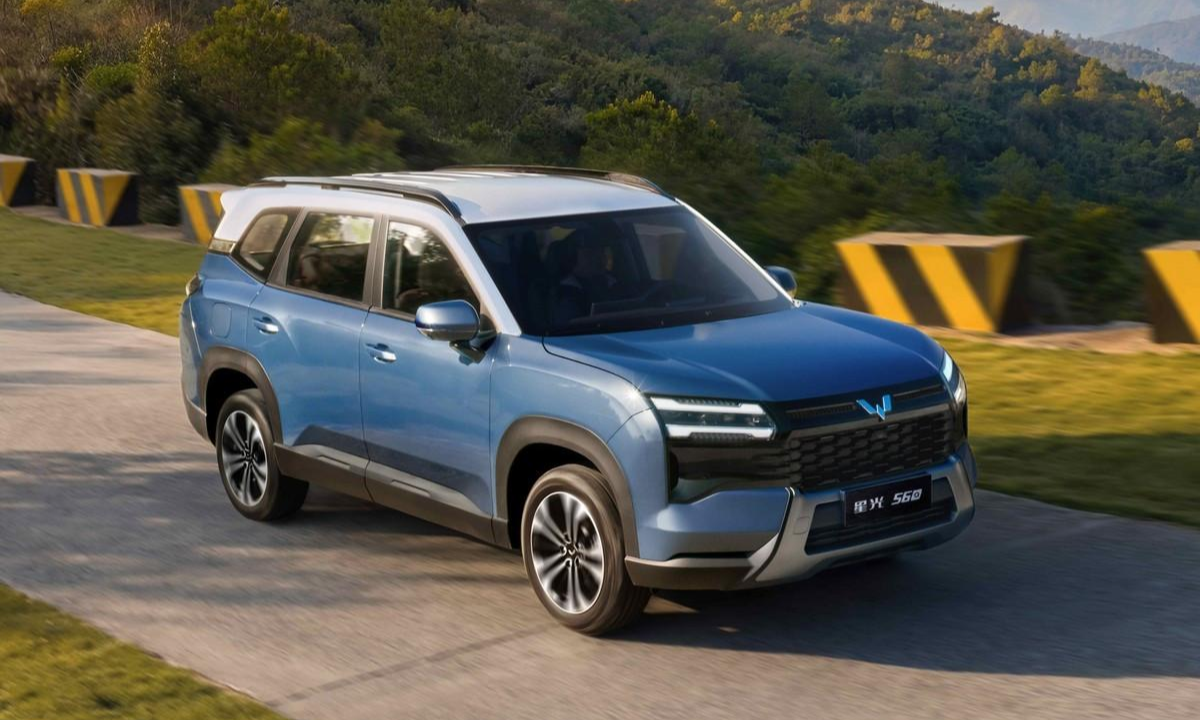
Wuling Starlight 560 vs BYD Sealion 5 vs Chery T8: Which Chinese Hybrid SUV Delivers Better Value?
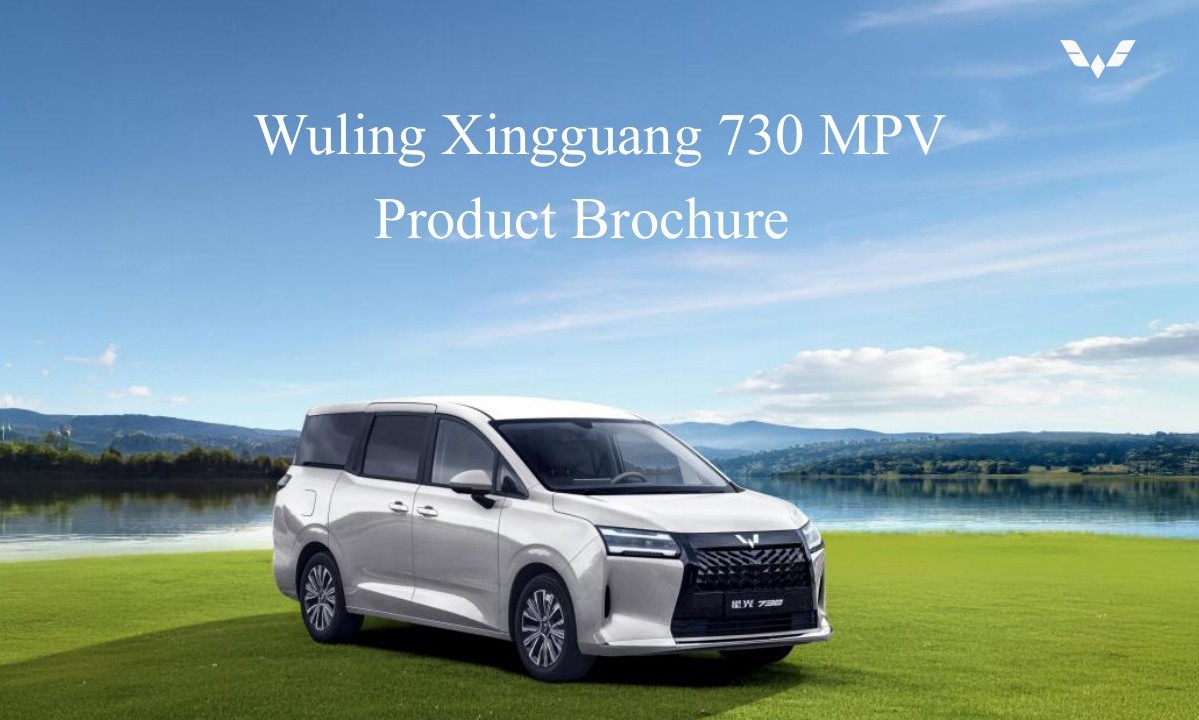
Wuling Starlight 730 MPV: 7-Seat Space, PHEV, EV and Gasoline Options for Global Buyers
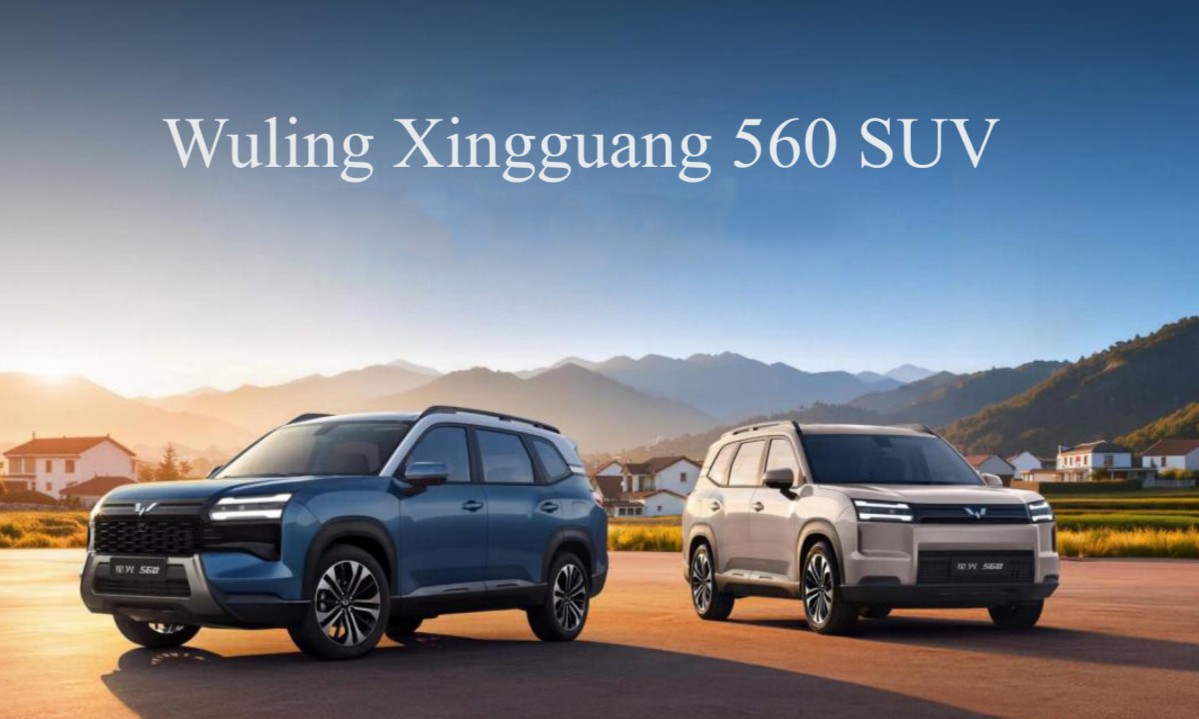
Wuling Starlight 560 SUV: PHEV, Electric and Gasoline Versions, Space, Safety and Global Sourcing Guide

 EN

